
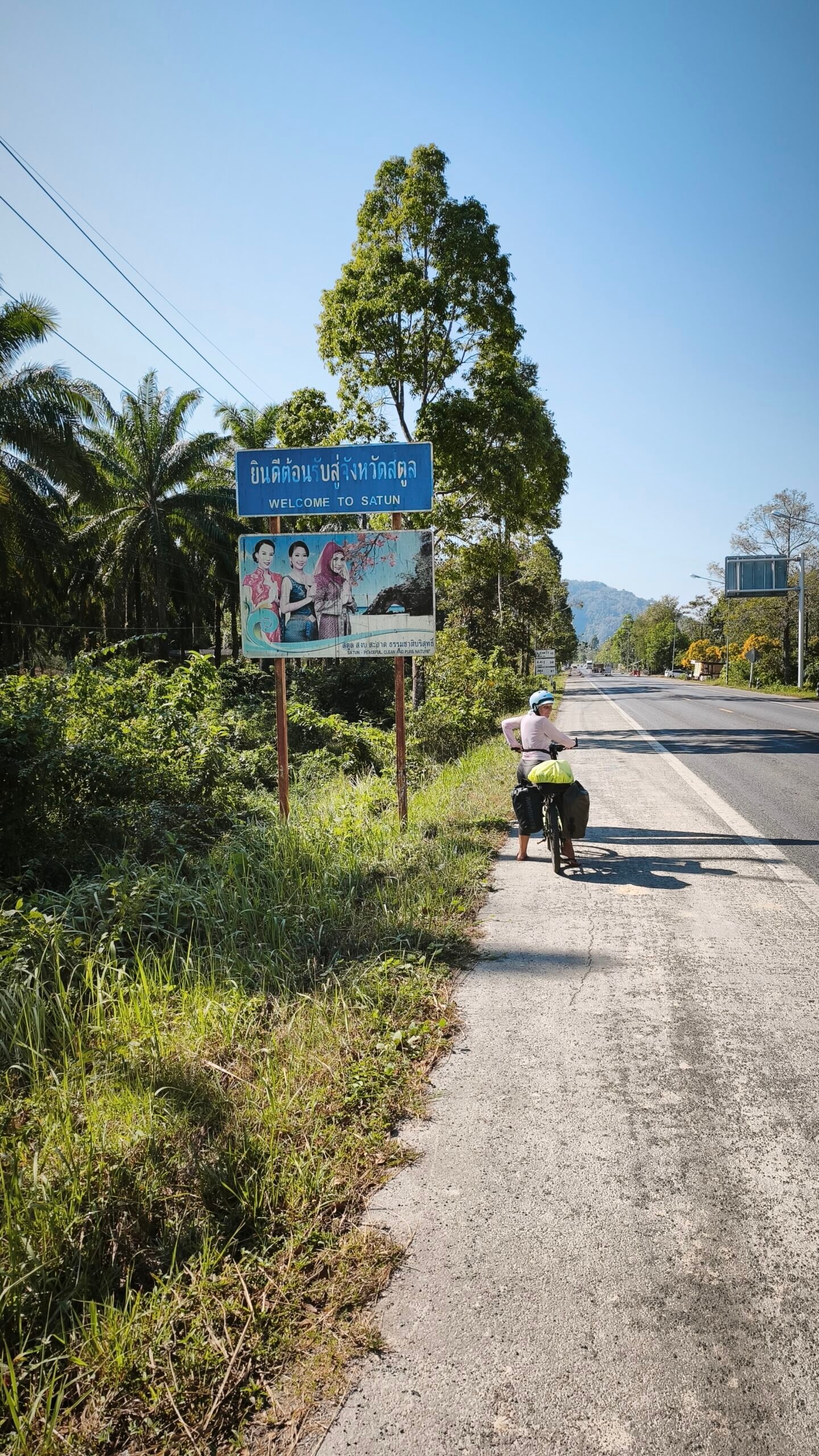
I did not realize working just three overtime hours a day could lead to a 60% higher risk of heart problems, but that stat from Speakwise hit me like a freight train in 2026. That was the moment I got serious about how I stopped letting work consume weekdays, because sugarcoating helps nobody when your chest feels tight at 11 p.m. on a Tuesday. We are Maurice and Joanna, and we do not write about dreams. We write about the real, sometimes messy process of removing daily frictions so you can keep going without destroying yourself in the process.

Key Takeaways
- Boundaries are not a luxury: 60% of U.S. workers report no clear boundary between work and personal life, and we were firmly in that camp.
- The digital nomad lifestyle is not about effortless travel: It is about removing small daily frictions so you can keep going without work eating every weekday alive.
- Remote work without structure is a trap: We had to build hard stops into our calendar or the work expanded to fill every waking hour.
- The right location matters: Finding the best places for digital nomads means choosing spots where time zones and infrastructure actually support your sanity, not just your Instagram feed.
- Tools are accessibility lifelines: AI tools for nomadic retirees helped us cut research time in half, giving us back entire afternoons we used to lose to admin tasks.
- Combining pension and remote work is the sweet spot: A steady pension plus flexible income gives you security without chaining you to a desk five days a week.
- Disconnection is a skill you practice: Less than half of U.S. workers feel comfortable disconnecting after hours, and we had to train ourselves to be part of that minority.
How I Stopped Letting Work Consume Weekdays: The Wake-Up Call
Let me be straight with you. There was a stretch in late 2019 where I was checking email before 6 a.m., answering client messages at 9 p.m., and telling Joanna I was “almost done” for the third time that evening. I was part of the 40% of employees who check email before 6 a.m., and that habit depletes you before the official workday even begins.
Joanna saw it before I did. She had been watching me slowly trade our evenings, our weekends, and eventually our weekdays for a laptop screen. We had spent years building a digital nomad lifestyle that was supposed to give us freedom, and instead we had built a portable cage. The whole point of Nomads By Choice After 50 was to live deliberately, not to recreate a corporate grind from a beach chair in Thailand.
The wake-up call was not dramatic. There was no single catastrophe. It was the slow accumulation of missed sunsets, skipped bike rides, and meals eaten cold because I was on a call that ran 45 minutes over. We are nomads by choice, and somewhere along the way I had let the choice slip through my fingers.
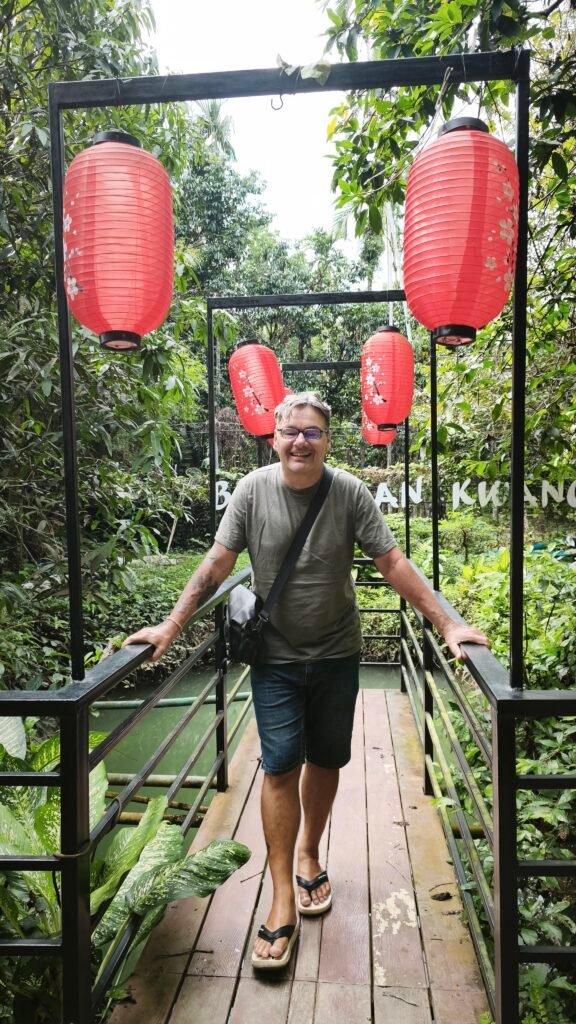
The Digital Nomad Lifestyle and Remote Work Boundaries
People ask us all the time about the digital nomad dream, and we always give the same answer. The digital nomad lifestyle is not about effortless travel. It is about removing small daily frictions so you can keep going, and one of the biggest frictions is the absence of natural work boundaries.
When you work from anywhere, the office never closes. There is no commute to signal the end of the day. There is no colleague turning off the lights and saying “go home.” Your kitchen table, your hammock, your hotel balcony, they are all the office. And if you do not build your own walls, the work will build them for you, except those walls will be around your entire life.
Are you ready for a life change after 50?
We noticed our evenings being swallowed up, consistent with data showing that meetings after 8 p.m. have surged by 16% year over year. That is not a typo. People are scheduling work calls after dinner, and if you are in a different time zone from your clients, it is adapting. We were taking 9 p.m. calls with European clients from Southeast Asia and telling ourselves it was “flexibility.” It was not flexibility. It was self-erasure.
The first boundary we set was the hardest one and the simplest one. We stopped opening the laptop before 8 a.m. Period. No exceptions, not even for “quick” checks. That single rule gave us back our mornings, and the mornings gave us back our sanity.
How I Stopped Letting Work Consume Weekdays While Traveling
Here is where the rubber meets the road. You can read every digital nomad guide on the internet, but none of them will tell you what happens when a client expects a deliverable at 5 p.m. their time and you are three time zones away eating street food in Chiang Mai. The theory is easy. The practice is where the get-free-slowly philosophy lives, or dies.
Our approach was ugly and practical. We batched our client calls into two days a week, Tuesdays and Thursdays, and made the other three days deep work days with no scheduled meetings. We told clients this was our structure, not a suggestion. Some pushed back. We lost one client. We kept our health.
The second thing we did was build a hard stop at 4 p.m. local time. When 4 p.m. hits, the laptop closes. Not “in a few minutes.” Not “after I finish this one thing.” It closes. Joanna enforces this because she knows I will not enforce it on myself. I am grateful for that every single day, even when I grumble about it.
We also started tracking how we actually spent our time, not how we thought we spent it. The results were embarrassing. I was averaging … Teams messages and Slack notifications a day, and I had been telling myself I was “mostly writing.” No. I was mostly reacting and writing in the cracks between reactions that feels like you accomplished nothing.
Digital Nomad Jobs: Finding Work That Respects Your Time
Not all digital nomad jobs are created equal when it comes to protecting your weekdays. Some work structures are inherently boundary-destroying, and others leave room for a life. We learned this the hard way after years of trial and error across different income streams.
The worst offenders are anything that requires real-time responsiveness across multiple time zones. Customer support roles, live chat moderation, anything where you are tethered to a queue. We are not saying these jobs are bad. We are saying they are incompatible with the kind of weekday freedom we were trying to build. If you want to know how I stopped letting work consume weekdays, the honest answer starts with choosing the right kind of work in the first place.
You can look up Maurice’s website if you are looking for a Dutch content specialist in the iGaming sector.
The remote work structures that worked best for us were project-based freelancing, consulting retainers with clear scope, and online teaching with fixed hours. These gave us deliverables with deadlines instead of open-ended availability. A deadline is a boundary.
Joanna found that her work became infinitely more manageable when she switched from hourly billing to project-based pricing. Suddenly, finishing faster meant earning more per hour, not earning less. It aligned her incentives with efficiency instead of presence.
Best Places for Digital Nomads to Actually Disconnect
Location plays a bigger role in this than most people admit. The best places for digital nomads are not just about fast wifi and cheap coffee. They are about time zones that let you sleep, communities that model healthy boundaries, and environments that pull you away from the screen when the workday ends.
We have spent time in the best countries for digital nomads across Southeast Asia, the Caribbean, Europe, and the pattern is clear. Places where life happens outdoors, where food is communal, where the culture does not glorify hustle, those are the places where we found it easiest to close the laptop. Thailand was transformative for us in that way, and the digital nomad visa options there, specifically the Destination Thailand Visa, gave us the legal framework to stay long enough to build real routines instead of living in two-week stints.
But let me be straight with you. No location will save you if your work habits are broken. We have met people in paradise who work 14-hour days in their bungalows and people in grey European winters who log off at 4 p.m. and go for a walk. The location helps. The habits are what actually change things.
When Joanna and I finally decided to stop letting work consume our weekdays, these eye-opening statistics showed us exactly why we were so exhausted.
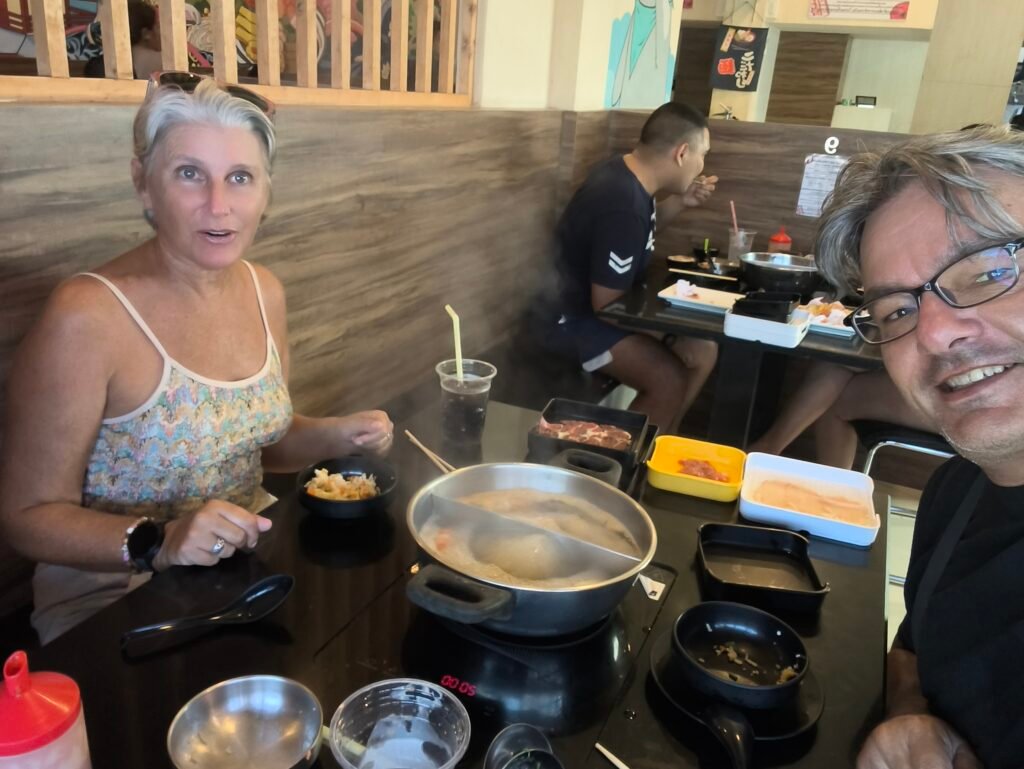
How I Stopped Letting Work Consume Weekdays With Simple Daily Habits
The big structural changes were important, but the daily habits were what actually held the whole thing together. We are not talking about productivity hacks or morning routines involving ice baths and journaling for 45 minutes. We are talking about small, boring, repeatable actions that turn a wall into a door.
First, we killed notifications on our phones for everything except calls from each other. No Slack, no email, no project management app pinging us at 7 p.m. about a task that can wait until morning. The average worker is interrupted by a meeting, email, or notification every 2 minutes. Every 2 minutes. We refused to be average anymore.
Second, we started taking a proper lunch break. Not at the desk. Not with the laptop open “just in case.” We walk away, eat something, and do not look at a screen for at least 45 minutes. This sounds trivial, but when we started doing it consistently, our afternoon productivity doubled and our evening exhaustion halved.
Third, we made a rule that one weekday evening per week is completely work-free, meaning no laptop in the room, no phone checking, no “just a quick reply.” We treat that evening like it is a flight. You cannot work on a plane, so you do not work on that evening. The mental shift is powerful.
Combining Pension and Remote Work Without Burning Out
One of the most powerful things we did to reclaim our weekdays was shifting our income strategy. Combining pension and remote work gave us the financial floor that made boundary-setting possible. When you know your basics are covered, you can say no to the work that eats your weekdays alive.
This is not about becoming a millionaire or building passive income while you sleep. We do not sell that fantasy because it is not real. This is about the get-free-slowly philosophy: a steady pension plus a manageable remote income stream that you control, rather than one that controls you. When the pension covers the rent and groceries, the remote work becomes a choice, not a survival mechanism.
Joanna noted that two-thirds of employees reported feeling burned out in some way this past year, proving our exhaustion was not isolated. But when we restructured so that the pension carried the baseline and the work from anywhere income became supplemental, the burnout started to recede. Not overnight. Slowly. The way real change actually happens.
The model that worked best for us is what we call the working traveller approach. You stay somewhere for 2 to 3 months, work a reduced schedule, and use the pension to fill the gap. You are not pretending to be on vacation. You are not pretending to be in an office. You are living in the honest middle, and that middle is where the freedom actually lives. You can read more about our story to see how we got here over two decades of trial and error.
Tools That Helped Me Stop Letting Work Consume Weekdays
We are not tech-bro types, and we are not going to recommend 27 apps that promise to optimize your life while actually just adding more interfaces to manage. But a few tools genuinely helped us claw back time, and we would be dishonest not to mention them.
The biggest time-saver was embracing AI not as a productivity hack but as an accessibility tool. For us, as nomads by choice in our 50s, AI translation and research tools cut the time we spent on administrative tasks in half. Booking appointments in a foreign language, researching visa requirements, drafting client communications in a second language, these used to eat entire afternoons. Now they take 20 minutes.
The second tool was a simple shared calendar with color-coded blocks. Green for deep work, red for calls, blue for personal time, and grey for travel or logistics. When the blue blocks are as visible as the green ones, it forces you to treat personal time as a real commitment, not an afterthought.
The third was a physical notebook. Yes, paper. When ideas, tasks, and anxieties live in your head, they consume mental bandwidth all day long. Writing them down in a notebook you close and put away at 4 p.m. is a physical act of boundary-setting that no app has ever replicated for us. I still think that Joanna is right on this one. Lmao.
We have made some of these mistakes ourselves, so this comes from experience, not a textbook. And we are not perfect. Some weeks the work still creeps back in, and we have to reset. But the baseline is different now. The default is disconnection, not connection. The exception is working late, not the rule.
The Health Stakes Are Real
We cannot talk about reclaiming weekdays without talking about what happens when you do not. The health stakes are real for us, and they are real for you. Working consistently just 3+ overtime hours a day leads to a 60% higher risk of heart problems. That is not a vague wellness statistic. That is a medical risk factor.
Even when we tried to get away, we saw the trend of 54% of workers checking email on vacation, turning time off into “working from a different location.” We have done this. Maurice sat on a beach in Vietnam with a hotspot and a laptop, pretending it was a vacation while setting up Seabreezekiteclub.
When work consumes everything, engagement suffers. Global employee engagement has dropped to just 20% as of 2025, according to Gallup. People are working more and caring less, and that is a soul-destroying combination. We decided we would rather work less and care more, even if it meant earning less.
Silver Sabbaticals and professional gap years are not a midlife crisis. They are a deliberate choice to live in a way that aligns with who you are now, not who you were thirty years ago. Reclaiming your weekdays is part of that recalibration. It is not selfish. It is sane.
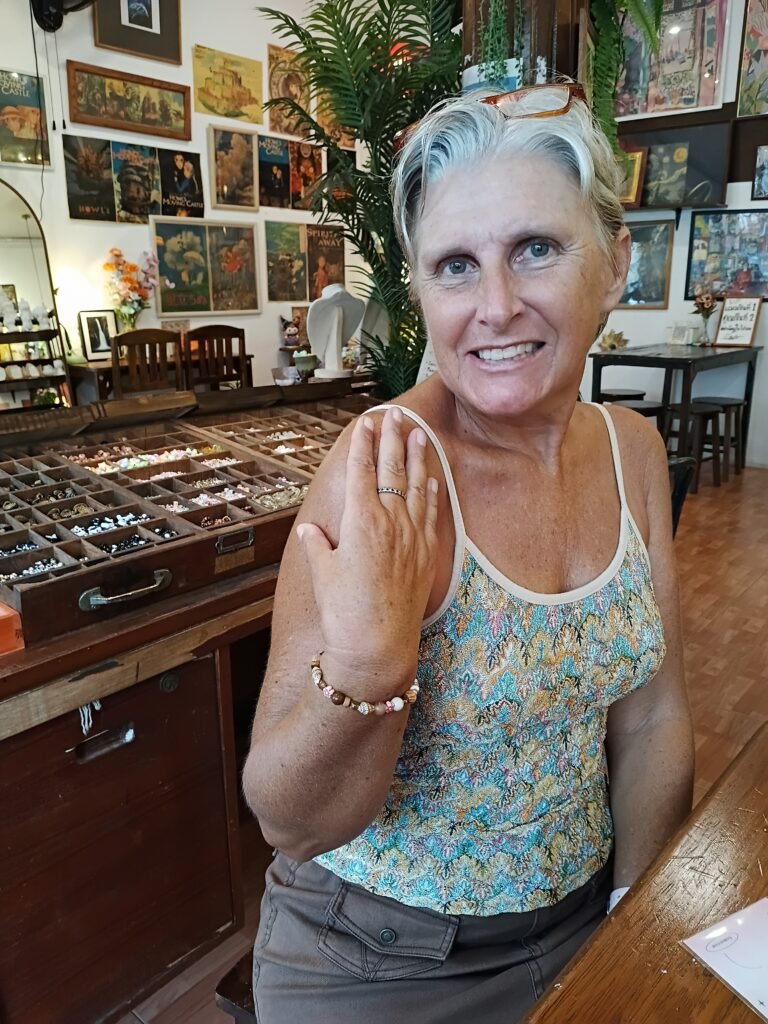
Conclusion
If you take one thing from this, let it be this: how I stopped letting work consume weekdays was not a single dramatic change. It was a series of small, unglamorous decisions that added up to a different life. Closing the laptop at 4 p.m. Batching calls into two days. Choosing project-based work over open-ended availability. Letting the pension carry the baseline so the remote work became optional instead of desperate.
We are Maurice and Joanna, and we do not write about dreams. We write about what actually works when you are trying to build a digital nomad lifestyle that does not eat you alive. The Nomads By Choice After 50 philosophy is not about working less for the sake of it. It is about working deliberately so the work serves the life, not the other way around.
The digital nomad lifestyle is not about effortless travel. It is about removing small daily frictions so you can keep going, and the biggest friction of all is the one you create when you let work expand to fill every weekday. Stop it. Close the laptop. Go outside. The work will be there tomorrow, and so will you, but only if you take care of the person doing the work.
Frequently Asked Questions
How do I stop letting work consume my weekdays while working remotely?
Start with hard boundaries: a fixed start time, a fixed end time, and no exceptions. Batch your calls into specific days, kill non-essential notifications, and choose project-based work over open-ended availability. How I stopped letting work consume weekdays was less about motivation and more about structure. Build the walls and the work stays inside them.
Is the digital nomad lifestyle actually sustainable after 50?
Yes, but only if you combine steady income with flexible work and protect your boundaries aggressively. Combining a pension with remote work gives you the financial floor to say no. Without that floor, the pressure to always be available will consume your weekdays faster than any office job ever did.
What are the best countries for digital nomads who want to disconnect after work?
Look for places where life happens outdoors and the culture does not glorify hustle. Thailand, Portugal, and Vietnam all offer strong infrastructure and communities that model healthier work habits. The best places for digital nomads are the ones that pull you away from the screen, not the ones with the fastest wifi in a co-working bunker.
Do I need a digital nomad visa to work remotely abroad?
It depends on the country and how long you plan to stay, but having one gives you legal certainty and longer stays. The Destination Thailand Visa, for example, is excellent for those over 50 who are not ready for traditional retirement visas. Treat the visa as a strong current opportunity, not a permanent promise.
How can I combine pension and remote work without burning out in 2026?
Use the pension to cover your baseline living costs and treat remote income as supplemental, not essential. This removes the financial desperation that drives overwork. When the pension pays the rent, you can log off at 4 p.m. without panic. That is the entire get-free-slowly philosophy in one sentence.
What digital nomad jobs are best for maintaining work-life balance?
Project-based freelancing, consulting retainers with clear scope, and online teaching with fixed hours are the best structures. Avoid anything that requires real-time responsiveness across multiple time zones. The best digital nomad jobs are the ones with deadlines, not open queues.
How long does it take to build healthy work boundaries as a remote worker?
In our experience, it took about three months of consistent practice before the new boundaries felt automatic. The first two weeks were painful, and we lost a client who would not adapt. But after that, the habits solidified and the weekdays became ours again. Start small, be consistent, and do not wait for motivation. Build the structure and let the structure do the work.