
When we started writing about our travels, we learned fast that a human tone outperforms a corporate one by 3x in terms of engagement. That single fact changed how we approach storytelling for nomad bloggers, and it is the backbone of everything we share at Nomads By Choice After 50. We are Maurice and Joanna, and we do not write about dreams. We write about what actually happens when you pack up your life after 50 and hit the road.
But let me be straight with you, because sugarcoating helps nobody. The digital nomad lifestyle is not about effortless travel. It is about removing small daily frictions so you can keep going, and then writing about those frictions honestly so others can learn from them.
| Key Point | What It Means for Nomad Bloggers |
|---|---|
| Emotional storytelling increases ad recall by 72% | Your nomad experiences stick in readers’ minds when you write with real emotion, not corporate polish |
| Travel blogs influence 48% of long-trip planning | Your deep-dive stories are essential reading for fellow nomads researching their next move |
| Long-form posts (2,000+ words) earn 77% more backlinks | Writing detailed, authentic stories builds authority and grows your audience organically |
| Human tone beats corporate tone by 3x | Write like you talk to a friend, not like a marketing brochure |
| 73% of readers skim content | Clear headers and smart formatting make your storytelling accessible even to quick readers |
| Emotional titles perform 8 to 12x better on social | Crafting headlines with genuine feeling drives massively more shares |
We did not start traveling to collect passport stamps. We started because decades of working as a chef and chalet girl in the French Alps taught us that life recalibrates when you step outside your comfort zone. Silver Sabbaticals and professional gap years are not a midlife crisis. They are a deliberate choice to live differently.
That is why storytelling for nomad bloggers in our age bracket hits different. We are not writing about cheap hostels and party beaches. We are writing about remote work realities, visa applications, healthcare abroad, and what it actually costs to live in the best countries for digital nomads when you are over 50.
Our readers want real numbers. They want to know if a digital nomad visa is worth the paperwork. They want to know if the best places for digital nomads actually have reliable internet. And they want to hear it from someone who has been there, not from a 22-year-old who visited for a weekend.
Through Nomads By Choice After 50, we built this guide for people who want the digital nomad lifestyle later in life and need real numbers. Our storytelling framework is not complicated. It comes from 20 years of living it.
No plan, no fixed destination, just the road ahead and the decision to see where it would take us. That is how our journey started, and that honesty is what we bring to every article we write. We took the little money we had, invested it in an apartment in the Dominican Republic, and thought we were going to get rich renting it out. Yay. Not.
That failure became one of our best stories. Because storytelling for nomad bloggers is not about painting a perfect picture. It is about showing the cracks, the mistakes, and the recoveries. People trust you when you admit you messed up.
If you are looking for a digital nomad guide written by people who actually live it, you are in the right place. Here is what we have learned about crafting stories that resonate with readers who want the truth about this lifestyle.
Every nomad blogger writes about sunsets. Few write about the three hours you spent at an immigration office trying to explain why your digital nomad visa paperwork has a typo. We write about the frictions because that is what people actually need to know.
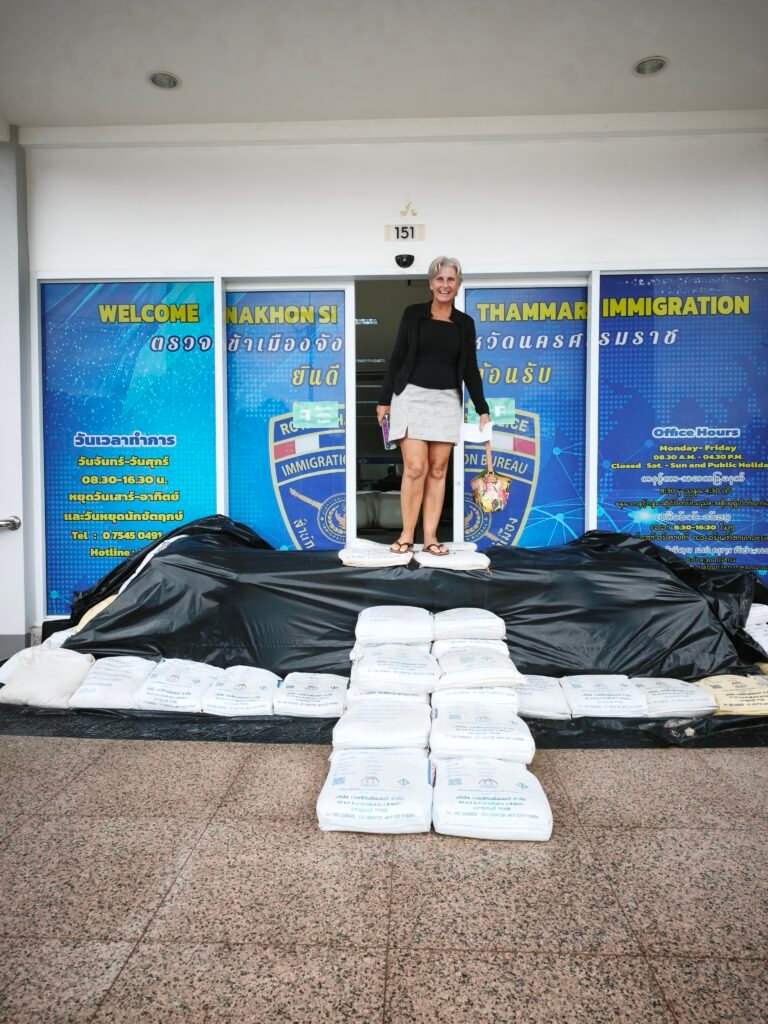
Removing small daily frictions is not just a lifestyle principle. It is a storytelling principle. When you write about the real obstacles of work from anywhere life, your readers walk away with something useful.
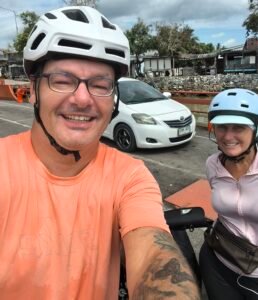
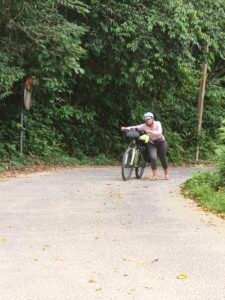
We write as Maurice and Joanna because that is who we are. The “we” perspective creates a sense of shared lived experience rather than solo expert advice. When we write about bikepacking 4,000km through Thailand, we write about both of our experiences. The heat. The broken spokes or the flooding in Hat Yai. The guesthouse that looked fine online but had no hot water for a week.
This is not a gimmick. It is how we actually experience the world. And it is why our readers trust us. They know there are two real people behind every word, not a content factory churning out generic digital nomad articles.
We share our actual bank statements. Our $1,200 monthly slomad budget is not aspirational. It is what we actually spend. When we write about the best places for digital nomads, we include what we paid for rent, food, transport, and internet. Every time.
Storytelling without numbers is just travel porn. We do not do travel porn. We do honest accounts of what it costs to live this life, in real places, at our real age.
Not every experience deserves a blog post. Here is how we decide what makes the cut when we are storytelling for nomad bloggers who read our Our Life Story category.
Remote work is not some fringe hustle anymore. It is the engine that keeps us moving. When we write about digital nomad jobs, we are not listing generic freelance categories. We are writing about the specific work we do, the tools we use, and the challenges of maintaining a work routine when your office changes every few weeks.
The storytelling happens in the details. Like the time Maurice was on a client call from a mountain guesthouse in northern Thailand and the wifi cut out mid-sentence. Or when Joanna had to edit a video on a bus with no power outlet for six hours. These are the stories that make the digital nomad lifestyle real for our readers.
We also write about the bigger picture. How to choose the best countries for digital nomads based on your specific work needs. Which digital nomad visa programs actually work versus which ones are bureaucratic nightmares. What remote work looks like when you are 55, not 25.
We dug into the data — here’s what storytelling actually does for nomad bloggers like us
Writing good stories is only half the job. You also need to format them so people can actually read them. Since 73% of readers skim, we use clear headers, short paragraphs, and visual breaks throughout every article.
Here is our formatting checklist for every story we publish:
Authority does not come from claiming to be an expert. It comes from showing up consistently with honest, detailed, useful content. We are nomads by choice, and every story we tell reinforces why people should trust us.
Travel blogs like ours influence 48% of long-trip planning. That is not a vanity metric for us. That is a responsibility. When someone reads our story about living in Chiang Mai on $1,200 a month, they might actually move there based on what we wrote. So we better get it right.
We always use a human tone in our writing because it outperforms a corporate tone by 3x in terms of engagement. And while we may use AI tools to help draft, we know that human-edited content ranks 3x higher than unedited robotic text. That is why we always add our personal touch. Every word passes through Maurice and Joanna before it goes live.
Because Joanna and I maintain high engagement, we can charge brands 3 to 5 times more than creators who have more followers but less activity. This is the power of authentic storytelling. You do not need a million followers. You need a few thousand who actually care.
As micro-creators, we aim for the 4.2 to 7.1% average engagement rate on Instagram Feed posts to keep our community tight-knit. We are not trying to go viral. We are trying to build trust with a specific audience: people over 50 who want to live and work abroad.
Our monetization approach is straightforward:
Every place we have lived has taught us something about storytelling. The Dominican Republic taught us about failure. Thailand taught us about endurance (4,000km on a bike will do that). And soon Cyprus will teach us bureaucracy. Each location adds a chapter to our narrative.
When we write about the best countries for digital nomads, we are not regurgitating listicles. We are sharing what it actually felt like to live there, work there, and navigate the systems there. The digital nomad visa process in one country might take two weeks. In another, it might take four months. We tell you which is which because we lived through both.
If you want to start your own storytelling journey as a nomad blogger, reach out to us. We answer every message. We typically respond within 1 to 2 business days. Because that is what community looks like when you are building it authentically, one story at a time.
Storytelling for nomad bloggers is not about being a great writer. It is about being an honest one. We are Maurice and Joanna, and we have spent 20 years figuring this out. Our stories work because they are true, because they include the failures alongside the wins, and because they always come with real numbers.
The digital nomad lifestyle is not effortless. It is not passive. And it is definitely not reserved for people in their twenties. Through Nomads By Choice After 50, we have shown that you can travel by choice, work from anywhere, and build a meaningful audience after 50. Your stories matter. Your experiences matter. And someone out there needs to read exactly what you have to say.
So write the hard stories. Include the real costs. Admit the mistakes. That is what storytelling for nomad bloggers is really about. It is honest, and our story.
Start with what happened yesterday. Write about a real experience, a real problem, and how you solved it. Storytelling for nomad bloggers works best when it begins with genuine lived experience, not aspirational content. Use a human, conversational tone because it outperforms corporate writing by 3x in engagement.
Nomad blogging focuses on the logistics of living and working abroad long-term, not short trips. Storytelling for nomad bloggers should include real budget numbers, visa experiences, remote work realities, and the daily frictions of the digital nomad lifestyle. Readers want practical depth, not destination highlights.
We write posts over 2,000 words because they earn 77% more backlinks than shorter content. Long-form storytelling for nomad bloggers allows you to include the detail readers actually need. Just make sure you use clear headers and formatting since 73% of readers skim.
Yes. Because we maintain high engagement as micro-creators, we charge brands 3 to 5 times more than creators with more followers but less activity. Authentic storytelling for nomad bloggers builds a loyal audience that trusts your recommendations. That trust is what monetizes.
Write about where you have actually lived, not where you visited for a weekend. The best places for digital nomads to cover are ones where you can share real costs, visa experiences, internet quality, and daily life details. Authenticity in storytelling for nomad bloggers comes from lived experience, not research.
You can use AI to draft, but human-edited content ranks 3x higher than unedited robotic text. We always add our personal touch to everything we publish. Storytelling for nomad bloggers requires your voice, your failures, and your real numbers. AI cannot provide those. Only you can.
Ask yourself if the experience solves a problem for your reader. If it helps someone avoid a mistake, navigate a digital nomad visa, or understand the real cost of living somewhere, write it. Storytelling for nomad bloggers works best when every post delivers practical value alongside genuine emotion.