

Welcome to The $1,200 ‘Slomad’ Budget Challenge, the no-nonsense experiment Joanna and I keep running across Southeast Asia, where as of June 2026 the global “slomad” population has reached 18 million, up from just 4 million back in 2023. That is not a fad. That is a quiet revolution of people who got tired of the conveyor belt and decided to live differently.
If you are over 50 and you have ever wondered whether twelve hundred dollars a month is enough to build a real life abroad, this is for you. We have lived it, messily and beautifully.
This is a digital nomad guide written for our generation, not for a twenty-something hunting Wi-Fi in a hostel dorm. Think professional gap year, but with more wisdom and less hostel snoring.
Key Takeaways
| Question | Quick Answer |
|---|---|
| What is The $1,200 ‘Slomad’ Budget Challenge? | Building a full, comfortable life abroad on $1,200 a month by slowing down and staying put longer. |
| Is it realistic after 50? | Yes. In different Thai places, a private studio, gym, massages, and weekend travel run between $850 and $1,200 a month. |
| What is the biggest hidden cost? | Health insurance. Over 50, expect $180 to $220 a month, so budget it first. |
| Where do most slomads do this? | Thailand and Vietnam rank among the best places for digital nomads on a tight budget. |
| Do I need to retire fully? | No. Our Working Traveller model funds the lifestyle through small remote work income streams. |
| How do I start? | Work out your survival number, choose a slow base, and stop giving yourself permission slips to stay stuck. |
What The $1,200 ‘Slomad’ Budget Challenge Actually Means
A slomad is a slow nomad. Instead of bouncing between cities every weekend, you settle into one place for a month, three months, sometimes six.
Joanna and I have watched this trend explode for a reason. Moving every week is exhausting and expensive, especially when your knees have opinions about lugging bags up stairs.
Slowing down is the single best way to make $1,200 that feels like $5,000. You sign longer leases, you find the cheap local market, you stop paying the tourist tax on everything.
The $1,200 ‘Slomad’ Budget Challenge is simple in theory. Live fully, comfortably, and legally on twelve hundred dollars a month, without pretending you are suffering for it.
This is about being clever with your money so you can spend your energy on the things that actually matter.
The Survival Number: The Foundation of Any Slomad Budget
Before you book a single flight, you need your survival number. This is the absolute minimum it costs you to exist somewhere with dignity each month. Think booking at Thaivietjet for example.
Rent, food, insurance, data, transport. We know it is boring, but essential and needs to be done.
We always tell readers to build this number from the bottom up, not the top down. Start with the non-negotiables, then add the nice-to-haves like massages and weekend trips.
Here is roughly how a healthy $1,200 ‘Slomad’ Budget Challenge breaks down for someone over 50 in Southeast Asia.
- Accommodation: $300 to $450 for a private studio on a longer lease
- Health insurance: $180 to $220, your non-negotiable line item
- Food: around $320 if you eat like a local, not a tourist
- Transport and data: $60 to $100
- Fun, massages, and a buffer: whatever is left, and there is usually a decent slice left
That is the whole game. The single biggest thing that holds us back from the life we dream of is ourselves, not the maths.
Best for Slashing Rent: Long Leases in the Best Countries for Digital Nomads
Accommodation is your biggest win in the whole challenge. Get this right and the rest falls into place.
In Chiang Mai’s popular Nimman neighbourhood, a climate-controlled studio with pool access can be secured for $250 to $450 a month on a six-month lease. That is half what you would pay booking week to week through an app.
This is the part people miss. The best countries for digital nomads on a budget reward patience, not speed.
Stay longer, sign a lease, negotiate in person. Landlords love a reliable tenant over 50 who pays on time and does not throw parties.
Thailand remains our favourite for this, and we have written about the real numbers in our guide to the cost of retiring and living in Thailand. Vietnam and Laos work beautifully too.
Best for Eating Well: The $10 a Day Food Strategy
Food is where new arrivals quietly bleed money. You sit in pretty cafes, order the imported flat white, and wonder where your budget went.
Budget-conscious nomads after 50 spend an average of $320 a month on food by mixing street food with home cooking and skipping the tourist-centric places. That is roughly ten dollars a day, and it eats like a king.
Our rule is simple. Eat like a local, not a tourist.

A bowl of noodles from the corner vendor costs a dollar or two and tastes better than the air-conditioned version across the road. Cook a few meals at home, hit the wet market, and your money stretches a long way.
This is not deprivation. This is sucking the juice out of life while spending less than you did on supermarket runs back home.
This infographic breaks down the three core budget pillars of the $1,200 Slomad Challenge. Use it to guide frugal, focused spending.
Best for Peace of Mind: Health Insurance Is Your Non-Negotiable
Here is the reality check Maurice and I always emphasize. Over 50, insurance is not optional, and it is not cheap.
You must budget for it before anything else. Skipping it to save a few dollars is the fastest way to wreck both your health and your finances.
We dig deeper into this in our notes on the common problems people face after 50 abroad, because medical surprises are at the top of that list. Sort the cover, then relax and enjoy the digital nomad lifestyle you came for.
Best for Staying Legal: The Digital Nomad Visa Angle
The $1,200 figure is not just a lifestyle choice. In many places it is a legal benchmark too.
The minimum income threshold for Colombia’s digital nomad visa in 2026 sits at roughly $1,100 a month. Earn just above that and you can qualify for legal residency in one of the most vibrant countries on earth.
That is a neat overlap. The same income that lets you live well also lets you stay legally and work from anywhere with a clear conscience.
Thailand has noticed the shift too. Long-stay visa issuance to European and North American nationals rose by 23% in 2025, driven by people chasing lower costs and good private healthcare.
You are far from alone in this. In 2026, 11% of the total digital nomad population is made up of people aged 60 and over, with Gen X adding another 25%.
Best for Building Wealth: The Working Traveller Model
Here is something that surprises people. You do not have to be fully retired to take The $1,200 ‘Slomad’ Budget Challenge.
Slomads report a higher median annual income, around $98,000, than traditional digital nomads. The reason is simple. A stable home base means you actually get work done.
This is the heart of our Working Traveller model. You fund the lifestyle through small remote income streams instead of draining a pension pot.
There are more digital nomad jobs open to our generation than ever, from writing and consulting to teaching and AI-assisted services. We share how we made that leap in our piece on working from home after 50.
When your survival number is low, even a modest income builds wealth instead of just covering rent. That is the quiet power of the slomad approach.
Best for Avoiding Nasty Surprises: The Going Home Tax
One hidden cost sinks more budgets than any cocktail ever will. We call it the Going Home Tax.
This is the annual cost of flights and gifts to visit family, and it averages between $800 and $3,000 a year for long-term nomads. Ignore it and the holidays will quietly blow up your monthly plan.
Our fix is boring and it works. Set aside around $100 a month into a separate pot, purely for going home.
That way, when your daughter calls about a wedding, you book the flight without flinching. Small habit, huge peace of mind.
How We Recalibrated Onto This Path
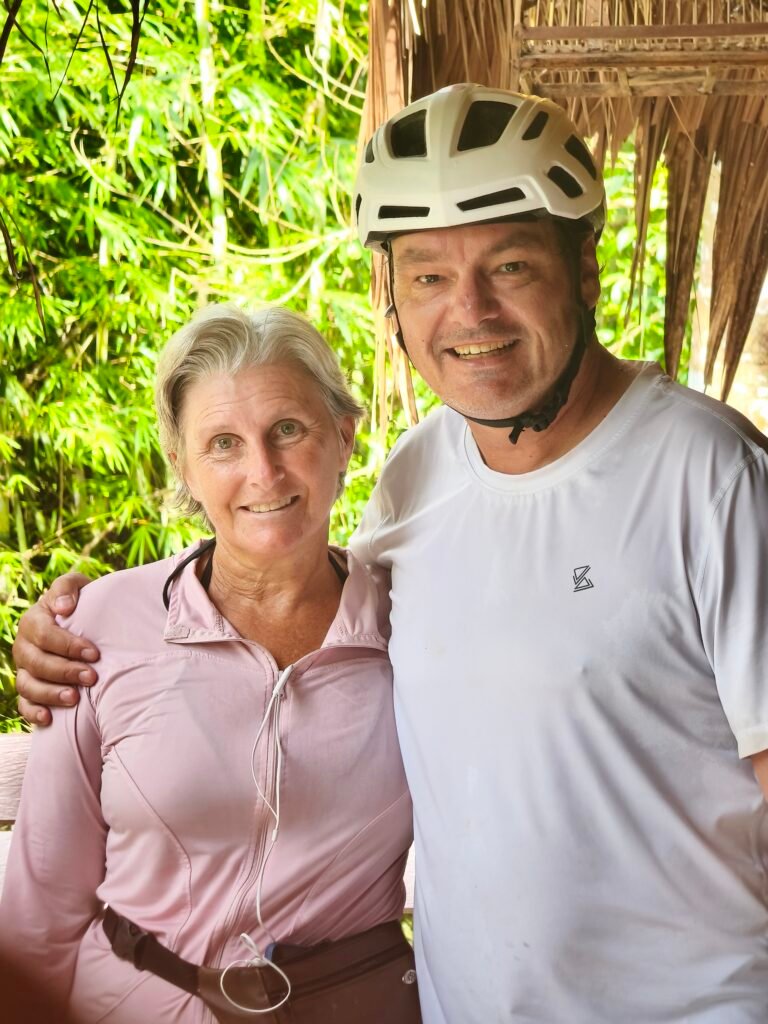
I am Jo, and Maurice and I have spent over 20 years living and recalibrating across Thailand, Indonesia, Vietnam, Laos, Greece, and the Dominican Republic. We were taught to climb the ladder, not leap off it.
We discovered slow travel, then bikepacking, then a way of funding it all that did not require permission from anyone. Silver Sabbaticals and professional gap years are not a midlife crisis.
If you want the longer story of how two people over 50 love this life, you can read about how we recalibrated life after 50. It is honest, and our story.
That experience is the whole reason Nomads By Choice After 50 exists. We are people who did this the hard way so you do not have to.
Frequently Asked Questions
Is The $1,200 ‘Slomad’ Budget Challenge realistic in 2026?
Yes, very. In places like Chiang Rai and Chiang Mai, a comfortable life with a private studio, gym, and weekend trips runs between $850 and $1,200 a month, so the challenge has real breathing room built in.
What are the best places for digital nomads on a $1,200 budget?
Thailand, Vietnam, Laos, and Colombia are among the best countries for digital nomads watching their spending. Each offers low rent on longer leases, cheap healthy food, and growing communities of people over 50.
Do I need a digital nomad visa to try this?
It depends on the country and how long you stay. Colombia’s digital nomad needs roughly $1,100 a month in income, which lines up almost exactly with The $1,200 ‘Slomad’ Budget Challenge, while Thailand offers several long-stay options worth researching first.
How much should I budget for health insurance after 50?
Plan for $180 to $220 a month for basic emergency cover if you are aged 50 to 59. It is roughly triple the under-40 rate, so treat it as the first line in your budget, not the last.
Can I fund this with remote work instead of retiring?
Absolutely, and many people prefer it. Our Working Traveller model funds the digital nomad lifestyle through small remote work income streams, which lets you build wealth while you live well on a low survival number.
Is the slomad lifestyle better than fast travel for people over 50?
For most of us, yes. Staying put longer slashes rent and travel fatigue, makes remote work far more productive, and turns $1,200 into a life that feels far richer than the number suggests.
Conclusion
The $1,200 ‘Slomad’ Budget Challenge is not about scraping by. It is about being smart enough with your money that you get to spend your days sucking the juice out of life instead of worrying about it.
Work out your survival number, protect your health cover, sign that longer lease, and stop giving yourself permission slips to stay stuck. It really is that simple, even when it is not always easy.
You need a survival number, a side hustle, and the guts to choose differently. So figure out your version of The $1,200 ‘Slomad’ Budget Challenge, and then go live the hell out of it.
It is never too late to create more freedom in your life.